Bench to Bedside : Development of new drugs/vaccines
- rajamohansub
- Jun 25
- 7 min read
Often, social media is flooded with many sensational news about the announcement/arrival of new wonder drugs for the treatment of various diseases/ailments including cancers, Alzheimer, heart ailments etc. and most of us dutifully forward them to many, though, most of them are fake or news deliberately leaked in the early phases of the clinical trial. One such example is referred below.
https://www.youtube.com/watch?v=dp6C4pBwoxk - Vaccines under development or in pre -clinical trials are hyped as a game changing vaccine,
Have you ever wondered, in normal circumstances, how much time, money, companies/agencies required, regulations to be adhered to, ethical compliance to be met before a new drug and/or vaccine is to be deployed for human use. The normal time cycle for a new bio drug to hit the market, after undergoing many phases of drug development and approval process would be between 10-15 years in comparison to 1 to 3 years for tech software and consumer electronics and 3 to 7 years for deep tech and medical devices.
https://www.patheon.com/us/en/insights-resources/blog/drug-development-phases.html - five phases of drug deployment
As per the US Food & Drug Administration (FDA), the drugs are classified into Prescription drugs and Over - the - Counter drugs, and a drug is defined as a substance intended for use in the diagnosis, cure, mitigation, treatment or prevention of disease.
This blog is mainly intended to make aware of the discovery/ development processes of the prescription drugs to the readers.
1.The origin of drugs / Pharma industry:
Early humans depended on nature, especially on herbs, plant leaves, seeds, barks, roots etc. for their health and wellbeing. Tamil Nadu has a long tradition of a plants/herbs based medicine system, Siddha, and it is even being practiced and widely accepted today.
Willow (வஞ்சி) tree's bark has been used for a long time for treating fever and inflammation in many counties including Greece, Egypt and China as it is found to have salicylic acid. With the advancement of Chemistry and Pharmacology, in 1897, a wonder drug (Acetylsalicylic acid) and later named as 'Aspirin' was synthesized in Bayer's laboratory in Germany by Chemists Felix Hoffmann and others. Bayer widely commercialized this drug for treating fever, headaches, arthritis and it was a runaway success and it transformed Bayer from a dyestuff manufacturer into a global pharmaceutical company.
Though Aspirin is considered as the first blockbuster drug in the world, chloral hydrate, a medicine for insomnia developed by Oscar Liebreich, Germany in1869 has been often regarded as one of the earliest synthetic drugs. Over the course of time, scientists found that a small dose of Aspirin could reduce heart attack and coronary artery disease as well, and as a result of that, even today Aspirin remains one of the most enduring and widely used drugs in medical history.

https://www.youtube.com/watch?v=uRhkDN2WjzI&t=7s- Aspirin discovery
As per Drug Controller General of India, the total global trade value of Pharmaceuticals stood at $2 trillions as of 2026 and India's share is about $60 billions (The Hindu dated 5th June 2026), India is a leading player in the production of bulk generic medicines(over - the - counter medicines) and vaccines, but the North American and European companies are dominating in the designed/prescribed drugs & vaccines space.
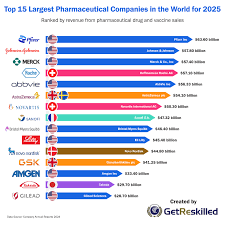
The dominance of American and European Pharmaceutical companies are mainly due to close collaboration and knowledge sharing between Universities, Research institutions/laboratories and the Pharmaceutical companies with Government support. This sort of collaboration and knowledge sharing is lacking in India, but the positive eco system is now developing.
As per PricewaterhouseCoopers (PwC) Consulting, as of 2025. Oncology (Cancer) drugs top the pharmaceutical drugs market by value, followed by immunology (anti- inflammatory, target therapies) and cardio- vascular drugs.
2.Clinical trial (drug studies in humans) initiation
In the formative years of pharmacology (before 1960), all the drugs developed in the laboratory/ universities, after animal trials, were supplied to physicians for use on patients and for making observations. Based on the testimonials by the physicians, the drug was deployed in the market for human use without any mandatory requirement to prove efficacy and safety of the drug.
USA was the pioneer to enact a Regulatory Act (Pure Food and Drugs Act) in 1906 requiring the drugs companies to list the active ingredients on the packaging of the drugs but not mandated to prove the safety and efficacy of the drug.
After the Elixir sulfanilamide, a drug produced by S.E Massengill company, Tennessee, USA, which was used to treat sore throat & swollen tonsils killed100 people including children in the USA in 1937, US enacted Federal Food, Drug and cosmetic Act,1938, which mandated the drug companies, for the first time, to establish the safety of the drug before marketing their drugs.
In 1953, the German company, Chemi Grunenthal developed a drug thalidomide, a sedative for treating sleeplessness and in1956, the same drug was introduced under the brand name 'contergan'. The drug became popular for its anti-emetic effect in pregnant woman suffering from morning sickness and it became a top selling brand in 1960. Later, in 1961and beyond, many pediatricians and geneticists made observations linking the use of thalidomide during pregnancy to congenital malformations. Further investigations confirmed this, which led to the withdrawal of thalidomide from the market. Enough damage has already been done in the society before the withdrawal of the drug and at least 10,000 infants were affected with more uncounted stillborn or miscarried pregnancies.

In the US, thalidomide was not endorsed for marketing by the then FDA officer Dr. Frances Kelsey (later awarded President award for the distinguished Civil Service) thus averted a major tragedy in the US. India also not recorded any death of infants as the exposure to the drug Thalidomide was minimal at that time.
Thalidomide tragedy hastened the enactment of Kefauver - Harris amendment in 1962 to Federal Food, Drug and Cosmetics Act, thus requiring the pharmaceutical companies to prove both safety and efficacy of their drugs before the approval for market deployment. Similar Acts were enacted by European and other nations for proving safety and efficacy of the drugs before market deployment.
https://www.youtube.com/watch?v=bJSKxUfK3cA- Kefauver - Harris Amendment (US Food and Drug Administration)
https://pmc.ncbi.nlm.nih.gov/articles/PMC3573415/- The rise, fall and subsequent triumph of thalidomide
3.Process of Clinical trial (Drug studies in humans)
The foundation for the controlled clinical trial was laid by the passing of the 1962 Kefauver - Harris Amendments to Federal Food, Drug and Cosmetics Act in the US and it became the Gold Standard for the drug review process. This amendment mandated a Pharma company/firm to prove safety and also has to provide substantial evidence of effectiveness for the product's intended use, that evidence has to contain the results of adequate and well controlled studies before hitting the market. Promoting Safe and Effective Drugs for 100 Years - FDA history office
A simplified modern drug development pathway can be illustrated as below:
Laboratory/university discovery > animal study > Phase I trial (safety) > Phase II trial (efficacy + dose) > Phase III trial (large scale confirmation) > Regulatory review > Approval > Post marketing surveillance.
Phase | Participants | Purpose | Typical Duration |
Phase I | 20–100 | Safety | 6–12 months |
Phase II | 100–500 | Dose & efficacy | 1–2 years |
Phase III | 1,000–10,000+ | Confirmation of efficacy & safety | 2–5 years |
Phase IV | Thousands to millions | Long-term monitoring | Years to decades |
Statistics shows that the overall success rates of the drugs are very low and around 90% of the drugs fail in the clinical trials. 90% of drugs fail clinical trials- American society for Biochemistry and molecular biology

Success rate of drugs
4.Agencies involved in clinical trail
Multi phases clinical trial requires involvement/active participation of many government regulatory bodies, private institutions & Pharma companies/startups, funding firms, clinical research organizations (CROs), universities, hospitals & medical colleges, Institutional review boards (IRBs) and research laboratories.
Phase III clinical trial, the largest of the lot, can not be handled by a single Pharma Company/firm as it spans around multi locations, requiring billions of dollars, huge administrative & technical manpower requirement and recruitment of large number of patients. To manage this complex task, Pharma companies normally contract a specialist Clinical Research Organization (CRO) to handle the administrative, technical, operational, patient recruitment, data management and for regulatory submissions. IQVIA (USA), ICON plc (Irish), Parexel (USA) are the leading CROs in the world
5. AI in vaccine/drug design
Unlike other industries, the role of Artificial Intelligence (AI) in clinical trial is little bit tricky and AI systems can not replace clinical trials. However, in target identification for initial drug discovery, AI is being used successfully (AlphaFold, an AI model developed by DeepMind, a subsidiary of Alphabet) thus shortening the time required for the initial drug discovery. Demis Hassabis, the CEO and John M. Jumper, the Director of DeepMind have been awarded the Nobel prize for Chemistry in 2024 for their model to predict protein structures with high accuracy. Very recent article from bbc.com reported that a team from the University of Cambridge has developed a fundamentally new vaccine (though in the early stages) to protect against a large swathe of viruses for the first time using AI.
https://www.bbc.com/news/articles/crrpggegwe0o - AI is used to develop new type of Vaccine.
In drug repurposing (how existing drugs can be used for curing new diseases), AI is increasingly employed by Pharma companies since it reduces the cost and time considerably. The most celebrated success story is the use of the drug 'Baricitinib', originally used for treating rheumatoid arthritis,has been repurposed by AI and subsequently validated by clinical trials to treat COVID -19
6. Do you know:
Coca- cola was originally produced as a headache and hangover relief syrup

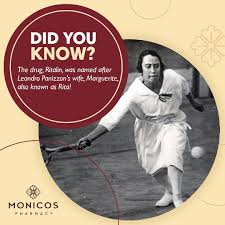
Hyperactive disorder medicine, Ritalin (CIBA Pharmaceutical company) was named after the chemist's wife, Rita, after noticing that the drug dramatically improved her tennis performance
Almost all of the early multi national Pharma companies were originally synthetic dye manufacturers.
Thalidomide which was withdrawn from the world market in 1961, after the tragic loss of 10,000 infants was repurposed and formally approved by the US FDA for the treatment of a type of cancer called multiple myeloma (a blood cancer) in May 2006.
Can you imagine the cost of the most expensive medicine, a whopping Rs.45 crores ($4.25million). Yes, Lenmeldy (Orchard therapeutics) a stem cell gene therapy medicine to treat rare genetic metabolic disease costs so much. https://www.drugs.com/article/top-10-most-expensive-drugs.html
Sildenafil (Pfizer) has evolved from an anti-angina (chest pain treatment) drug to an on -demand oral treatment for erectile dysfunction (Viagra) and more recently to a new orally active treatment for pulmonary hypertension (Revatio). https://pmc.ncbi.nlm.nih.gov/articles/PMC7097805/
Covid-19 pandemic propelled the revenue of the Pharmaceutical company Pfizer (USA) to a record breaking level of $100.3 billion (all time high for any Pharma company) in 2022 fiscal year mainly on the sale of their mRNA based vaccine (Pfizer - BioNTech covid19 vaccine) and the Covid19 Oral treatment (Paxlovid)


Dear Rajamohan,
As usual another nice presentation on drugs. Very useful learnt about Thalidomide drug and how it affected babies and the need for drug control was explained there.
India’s vaccines contribution and during COVID time how phase iv was bypassed to bring the vaccine could have elaborated.
Nice work again and learning a lot through your blog.
Nicely analyzed the drugs history for special diseases and how they are being systematically developed internationally. It is a very long pathway to develop and establish a drug.
But how many pharmaceutical companies develop, produce really proven and genuine medicines in India?
Recently we had an unfortunate incident in India. Few children causalities were there due to the intake of contaminated cough syrup.
It looks like that in India medicines are produced by any company and made freely available in the market. Doctors prescribe medicines which will be available in their own medical shop or hospital or only in the shops near to their clinic. We can not get these medicines in other areas. How to…
Dear Rajmohan,
To be honest, when I first saw the article, I assumed it might not be my cup of tea. Nevertheless, I decided to read it so that I could give you a genuine review.
I initially skipped the YouTube links and references, wanting to see whether the article itself would capture my interest. The opening statement, “Aspirin is the first pharma…”, immediately caught my attention and motivated me to read further.
I have only read part of the article so far, but I felt compelled to share my thoughts before completing my review. It is a great example of how a strong opening can draw readers into a topic they may not normally explore.
You have developed a…
Your vast knowledge and efforts about the topic is really appreciable.
Nicely presented. Few directly related / indirectly related thoughts.
1) Control over selling of prescription medications without prescription is rampant in third world countries including India
2) When a pharma company spends years in time and millions of Dollars in money to develop a drug , normally they get a patent for that drug and try to recover the cost . But there is a time limit for this patent . After that any company can make that drug . This is to stop profiteering by big companies
3) Like Aspirin ,discovery of Penicillin and other antibiotic medicines are considered the milestones in development of affordable medicines for common illnesses
4) Clinical trials also involved tests on animals . Th…