A cross cultural sociology of the street: Mendicancy, Busking (Street Performance), Panhandling and Begging
- rajamohansub
- 8 hours ago
- 5 min read
A street - whether it is a winding dusty theru (தெரு), a sprawling stone - paved city center, a broad avenue, a bustling bazar or a narrow village lane - is a vibrant microcosm of society. It reflects and embodies a living mosaic of culture, social dynamics, socio economic diversity, order and chaos, cooperation and conflict. The unique identity of any street lies in the distinct character and values upheld by its residents and the visitors alike.
Seeking alms/voluntary contributions, entertainment are the recurring scenes frequently witnessed on the streets across the globe. It assumes different names [mendicancy, busking (street performance), panhandling and begging] and different styles based on the religious, cultural, social and economic context of a particular country, region and society.
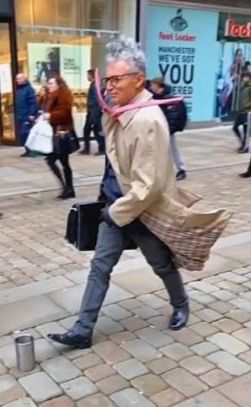
When I was in Manchester, Uk for about an year, I witnessed many busking activities (solo guitar, full band violin, keyboards, stationary characters, spontaneous pop-ups, football tricks) especially during weekends on the Market street exhibiting the unique skills of the artists. One particularly memorable performer was the artist Reinaldo Mirando from Chile, known locally as 'Windswept man'. Passers - by voluntarily drops coins/notes into the container placed before him.
1.Religious Mendicancy :
Ancient Indian religions and philosophical traditions including Aseevagam, Hinduism, Buddhism and Jainism espouse mendicancy as a powerful religious principle. Ascetics of these religions having renounced all worldly possessions, voluntarily seek alms for sustenance in order to attain a total state of non-possession,enlightenments and higher spiritual echelons like moksha.
Christianity has friars (Dominicans, Franciscans, Carmelites and Augustinians) and Islam has a small group in Sufi sect (Qalandariyya, Khaksar) which practices mendicancy

Sangam and later Tamil ethical thoughts decried the act of begging and the classic Tamil literature, Thirukkural,in many couplets reflected intense anguish and rage against the societal condition of begging especially in couplet 1062 as thus
இரந்தும் உயிர்வாழ்தல் வேண்டின் பரந்து
கெடுக உலகியற்றி யான். (குறள் 1062)
(If the creator of the world has decreed even begging as a means of livelihood, then, may he too go abegging and perish)
At the same time, Indian societies at large, including Tamil society revered and respected the ascetics who practiced mendicancy as their way of life. Religious mendicants generally use a bowl (திருவோடு) made out of the shell of the fruit of calabash tree (திருவோடு மரம் - botanical name - Crescentia cujete). Calabash is the national tree of St.Lucia, an eastern Caribbean island.
https://www.vikatan.com/government-and-politics/28064- - திருவோடு மரம்
https://www.youtube.com/watch?v=WAKUsUL9oMk - Calabash tree ( திருவோடு மரம்) .


2, Busking (Street performance) :
Busking (a British slang - mid 19th century) is different from begging, since the buskers normally entertain the shoppers, passers - by in the busy market places/ streets by performing different genres of music, signing and exhibiting unique talents and expect voluntary contribution in kind from the audience.
Many cities in Europe,including Manchester city, UK have 'Busking code of conduct' in place. As per that, among other things, buskers are not allowed to actively collect money, however, they are allowed to have receptacle such as a hat, a music case or box for the acceptance of donations from the public. Some boroughs/cities have the requirement of paid licenses. ,
https://www.manchester.gov.uk/licences-and-permissions/busking-code-of-conduct - Manchester city council busking code of conduct


India has varied vibrant culture of street performances including acrobatics, rope art, magic, music, puppetry show and many others. Street performance in India is regulated by the Police head of a city/town.
Chennai,which celebrated its 387th birthday recently (22nd August 26) has a vibrant and growing street performance culture thanks to many dynamic arts groups/enthusiasts, Chennai corporation. non-profit organizations, individual initiatives, Press and community organizations. Various initiatives like ' On the streets of Chennai'( https://onthestreets.in/about-us ), 'Happy streets', 'Mylapore festival' and 'Chennai Sangamam' are organised at regular intervals in the walking zone of Pondy Bazar, T Nagar, Anna Nagar tower park. beaches ( Marina, Thiruvanmiyur, Kottivakkam, Akkarai and others ), and in many other places cementing Chennai's status as the capital of Street performance in India


Carnival is the grand stage of street performances. Worldwide, many countries including India have their own share of street carnivals. Some carnivals attract international audience and their tickets go premium. The notable among them are : New Orleans's Mardi Gras, Washington DC's Smithsonian Folklife festival, Spain's (Bunol) La Tomatina, Italy's Venice Carnival, Japan's (Kyoto) Gion Matsuri, Thailand's (Chiang Mai) Yi Peng, Brazil's Rio de Janeiro carnival, Australia's Melbourne International comedy festival, and India's Goa carnival


3.Panhandling:
Primarily in the US and in Canada, the term 'Panhandling' is used for describing the act of seeking money, donation and food in public. I have noticed from my personal experience, that, panhandling is more visible on the US city streets than in Canada
As per the data available as of January 2025, about 22 out of every 10,000 people are homeless in the US ( https://usafacts.org/articles/how-many-homeless-people-are-in-the-us-what-does-the-data-miss/) with major cities carry the burden. Some (exact percrntage not known) of the homeless depend on Panhandling.

The class disparity which I witnessed on the streets of major cities of the US ( Atlanta, New York, Chicago, Philadelphia, Los Angeles, San Francisco, Dallas, and Austin ) during my earlier visits to the US made me realize that the menace of begging (panhandling) is not the exclusive domain of poorer nations.

Passive panhandling is generally not illegal in the US. US Federal court struck down ( Reed vs Town of Gilbert) the request for banning panhandling across the US citing 'protection of speech' in the First Amendment of the US Constitution https://firstamendment.mtsu.edu/article/panhandling-laws/ . But many cities and States prohibit 'aggressive panhandling' which includes threatening behaviour, blocking paths, touching people without consent. I had experienced aggressive panhandling when I visited 'Underground Atlanta', a shopping and entertainment district in the downtown Atlanta.
Begging
Begging is prevalent in both developed and developing nations driven by poverty, disabilities, social exclusion, homelessness, displacements and active involvement of begging syndicates. https://www.ispp.org.in/begging-in-india-a-cry-for-help-or-a-well-oiled-racket/ - Indian School of Public Policy
In India, legal frameworks addressing this issue are largely archaic and punitive and many times Indian Higher courts have struck them down as unconstitutional ( Harsh Mander Vs Union Of India, 2018)
Tamil Nadu has ' The Tamil Nadu prevention of begging Act,1945 which says that ' soliciting or receiving alms in public place, whether under the pretence of singing, dancing, performing tricks, or selling article or otherwise '. Similarly, many other Indian States also have statutes prohibiting begging in public places.
India and many other East Asian countries have culturally and spiritually practiced and revered religious mendicancy as a part of their pious religious duty. This habit make many people sympathise with alms seekers on the streets and nearby religious places like temples and churches.
The alms seekers and especially the crime syndicates exploit this sympathetic attitude of the general public by recruiting the destitute women and children and make them beg on behalf of them and collect the money from them leaving the alms seekers in a permanent state of poverty.

Snippets
As per Indian media reports, Bharat Jain is reportedly the world's richest beggar worth about Rs.7.5 crores, lives in Mumbai with his family.

Funny panhandling sign

Snake charmers, Indian rope trick magicians and animal trainers, once, used to be performing on the streets of India are not visible nowadays due to shift in cultural priorities, prohibition of wild animals on the streets and the imposition of the archaic laws on them


Very nice and meaningful article. Lessons learnt.